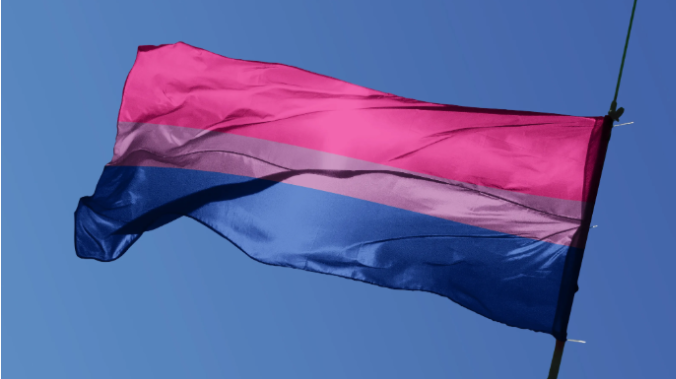

Annually, from September 16th to September 23rd, organizations and members of the LGBTQ+ community celebrate the bisexual+ community. The last day of celebrations is also the international bisexuality+ day.
Bisexual+ Awareness Week seeks to accelerate the acceptance of the bi+ community, meaning identities such as bisexual, pansexual, fluid, no label, queer, etc. It draws attention to the experiences of bi people, while also celebrating the resiliency of the bisexual+ community. Throughout bisexual awareness week, allies and bi+ people learn about the history, culture, community, and current policy priorities of bi+ communities.
This article was created in collaboration with the SLC LGBTQ+ club to help people learn about bisexuality+.
What is Bisexuality?
The term “bisexuality” is often used either as an umbrella term–something that is discussed later on in this article–or as a specific label. In the latter case, bisexuality encompasses both heterosexual (opposite sex) and homosexual (same-sex) attraction. In everyday language, it usually translates into a variety of popular definitions. These definitions include: attraction to men and women, attraction to both sexes and attraction regardless of sex.
There is an important distinction to understand between romantic and sexual identities. “Bisexual” is often used as shorthand for being sexually and romantically attracted to two–or more–genders, even if more specifically, it refers to the sexual orientation rather than the romantic orientation of a person. Many people who are bisexual identify as biromantic as well.
Meanwhile, “Biromantic” refers to people who are romantically attracted to two or more genders. These people might have the capacity for a deep emotional pull towards two or more genders, a longing to be close or committed to them or perhaps even a desire to “build a life” with them without the urge to have sex with any of them.
Like any queer identity, being bisexual is a very diverse experience which is different for everybody. There is no one way of being bisexual. For many, it’s subtle and easy to miss, while for others, the way they feel is obvious to them. Some can also see it as having more opportunities for love.
However, there can be many issues, such as facing discrimination for your sexuality, and feeling alienated from both gay and straight spaces. However, there is still a community to be found with other bisexual people.
Bisexuality as an Umbrella Term
The use of “umbrella term” is often a synonym for the word spectrum in the case of romantic and sexual orientations. The umbrella term itself is a word or sentence that is used to describe a wide range of other terms, kind of like a category. Imagine an umbrella, the umbrella forms the word or sentence, and what is under it are the different things that the term encompasses.
The umbrella labels can help people feel seen and understood by relieving them of the pressure to squash themselves into ill-fitting boxes, and helping them connect with communities and partners who align with their own experiences.
The Bisexual umbrella is a general and inclusive term that encompasses everyone whose sexual and romantic identity is not limited to one gender or sex.
Some other identities that are well known that fall under the bisexual umbrella are pansexual (the attraction to all genders without preferences) and omnisexual (the attraction to most, if not all genders with some preferences).
Bi-Erasure
When thinking of bi-erasure, it is important to know what biphobia is. Biphobia describes a range of negative attitudes (e.g., fear, anger, intolerance, invisibility, resentment, erasure, or discomfort) that one may have or may express toward bisexual individuals. Biphobia can come from anyone, including the LGBTQ+ community.
Being biphobic describes actions, behaviors, or individuals who demonstrate elements of this type or negative attitudes toward bisexual people.
Bisexual erasure happens when bi people and their experiences are ignored, dismissed or downplayed. A bi person’s sexuality does not change to straight or gay (or anything else) depending upon the sex of their partner; even if they are in a long-term monogamous relationship, a bi person is still bi.
Bisexuality awareness week is celebrated as a way to help bi people to feel seen and to discourage misinformation being spread about queer identity. Never hesitate to do more research to learn about the community. Simply make sure that you are looking at trustful sources. Happy bi-awareness week everyone!
Writers: Sun Pellerin, Ayla Gobeil, and Mia Bouchard; Editor: James Beaupré; Picture: usatoday.com